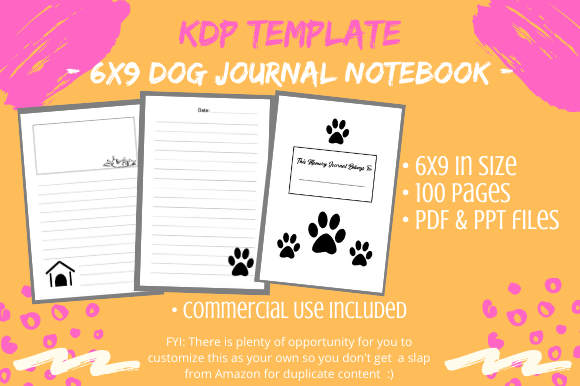
Customizing the Dog Journal Memory Notebook for Unique KDP Interiors
The market for pet-related stationery and memory keeping has expanded significantly, moving beyond simple photo albums into specialized tools for tracking health, training progress, and sentimental milestones. For creators in the low-content and no-content publishing space, the Dog Journal Memory Notebook represents a versatile foundation that bridges the gap between consumer utility and creator flexibility. This specific interior template is designed with both end-users and self-publishers in mind, offering a 6x9 inch format that balances portability with adequate writing space. Understanding the technical specifications and customization potential of this digital asset is essential for producing a high-quality product that stands out in a saturated marketplace while providing genuine value to dog owners.
Technical Specifications and Print Safety
When working with print-on-demand platforms like Amazon KDP, adherence to technical constraints is the primary determinant of production quality. This particular blank journal interior is engineered specifically as a NO-bleed document. In printing terminology, bleed refers to artwork or background colors that extend past the trim edge of the page. By utilizing a no-bleed configuration, all content remains safely within the margins, ensuring that no critical text, lines, or decorative elements are accidentally trimmed during the binding process. This safety margin is particularly important for 6x9 notebooks, where the usable area is already compact compared to larger formats.
The package includes two distinct file types: a ready-to-upload PDF and an editable PPT (PowerPoint) file. While the PDF serves as a finalized proof or a quick upload option, the PPT file is the operational core for customization. PowerPoint is often overlooked in book design but offers significant advantages for low-content interiors. Unlike complex vector software, PPT allows for intuitive drag-and-drop manipulation of page elements, making it accessible for creators who may not possess advanced graphic design skills. The 100-page count provides a substantial volume for a premium feel without pushing printing costs to a point that erodes profit margins on standard paperback sales.
File Management and Workflow Best Practices
Before initiating any design work, establishing a secure file management protocol is mandatory. Digital assets should always be treated as master templates. Upon downloading the Dog Journal Memory Notebook files, the immediate first step must be creating a duplicate copy of the original PPT and PDF. Working directly on the source file risks accidental corruption or irreversible changes that could compromise future projects. Maintaining a pristine master copy ensures long-term usability and allows for multiple derivative works to be created from a single license.
This duplication strategy also supports version control. As you modify page styles, add clip art, or restructure the layout, saving iterative versions prevents data loss and allows you to revert to previous states if a design experiment fails. For professional publishers managing multiple SKUs, organizing these files into dedicated project folders with clear naming conventions streamlines the production pipeline and reduces administrative friction.
Strategic Customization to Avoid Duplicate Content Penalties
A critical consideration for any KDP publisher using pre-made interiors is platform compliance regarding duplicate content. Amazon’s algorithms actively identify books with identical internal pages, potentially flagging them as repetitive or low-quality. To mitigate this risk and ensure the longevity of your listing, the Dog Journal Memory Notebook must be transformed into a unique product rather than used "as is." The included PPT file facilitates this differentiation through several actionable modification strategies.
- Page Reordering and Selection: The template includes several different dog page styles. Rather than retaining the default sequence, curate a custom flow that matches a specific niche. A puppy training journal might prioritize potty tracking and vaccination logs, while a senior dog memory book would focus on medical history and nostalgia. Deleting irrelevant pages and rearranging the remaining ones instantly alters the book's structural fingerprint.
- Visual Augmentation: Integrating proprietary or licensed clip art, breed-specific silhouettes, or custom borders adds a layer of uniqueness that generic templates lack. Even subtle changes, such as modifying line weights or adjusting header fonts, contribute to visual distinction.
- Textual Personalization: Changing page titles, adding inspirational quotes about pet ownership, or including instructional prompts transforms a passive lined page into an interactive guided journal. Specificity sells; replacing generic "Notes" headers with "Vet Visit Observations" or "Daily Walk Route" targets user intent more effectively.
- Functional Additions: Consider inserting coloring pages, word searches, or care checklists. These value-adds not only differentiate the interior but also expand the target audience to include children or gift-givers looking for activity-based content alongside traditional journaling space.
Diverse Page Styles and User Applications
The inclusion of multiple page styles within this single interior asset maximizes its utility across different demographics. For adult users, structured layouts facilitate organized record-keeping. Health trackers allow owners to monitor medication schedules, allergy reactions, and dietary changes over time, providing veterinarians with valuable longitudinal data. Training logs help track command mastery and behavioral modifications, turning the notebook into an active tool for canine development rather than a passive repository.
Conversely, the versatility of the 6x9 format makes it suitable for younger audiences when appropriately customized. Kids can use the blank spaces for drawing their pets, practicing handwriting, or documenting fun facts about different breeds. Educators and homeschoolers might utilize the template as a biology unit supplement, where students maintain observation journals for animal behavior studies. The no-bleed design ensures that crayon marks or pencil sketches stay within safe boundaries, maintaining a neat appearance even with enthusiastic young users.
Market Positioning and Audience Segmentation
Success with the Dog Journal Memory Notebook depends less on the template itself and more on how it is positioned for specific sub-niches. Broad "dog journals" face immense competition, but specialized applications encounter lower barriers to entry. By leveraging the editable nature of the PPT file, creators can pivot toward underserved segments.
Professional Pet Care Providers: Dog walkers, groomers, and sitters require portable client records. A modified version of this interior could serve as a service logbook, featuring appointment grids, grooming preference notes, and emergency contact sections. Marketing this variation B2B opens revenue streams outside the typical consumer gift market.
Breed Enthusiasts and Clubs: Generic dog imagery appeals to everyone and no one simultaneously. Tailoring the interior to specific breeds—such as Greyhounds, Dachshunds, or Working Dogs—creates instant resonance. Adjusting page titles to reflect breed-specific health concerns or activities demonstrates expertise and builds trust with passionate communities.
Therapeutic and Emotional Support Contexts: Pet loss journals or therapy dog documentation represent sensitive niches requiring thoughtful design. Modifying the tone of prompts and selecting softer, more reflective page styles can adapt the base template for grief processing or professional certification tracking. In these contexts, the physical act of writing serves a psychological function, elevating the product from stationery to a wellness tool.
Considerations for Digital Product Integration
Since this is a digital download product, the end-user experience begins at the moment of purchase. Clear communication regarding file usage is paramount. Buyers must understand that they are receiving editable source files, not just a finished book. Providing brief instructions on how to manipulate the PPT file, export to PDF, and upload to KDP can reduce customer support inquiries and negative reviews stemming from technical confusion.
Furthermore, creators should verify licensing terms associated with any additional assets added during customization. While the base Dog Journal Memory Notebook grants rights for modification, third-party clip art or fonts may have separate commercial use restrictions. Ensuring full compliance across all layered elements protects against intellectual property disputes and maintains professional integrity. Regular audits of the final PDF before publication catch formatting errors, margin violations, or unintended duplicates that automated checks might miss.
The intersection of thoughtful customization and technical precision defines sustainable success in low-content publishing. By treating the Dog Journal Memory Notebook as a malleable framework rather than a static product, creators can build a diverse catalog that serves real needs. Whether facilitating veterinary care, preserving family memories, or supporting educational objectives, the true value emerges when the template disappears behind a purposeful, user-centric design. This approach not only satisfies platform requirements for originality but also fosters genuine connection with buyers seeking meaningful ways to document their relationships with canine companions.