15 Circle Mazes for KDP Activity Books: Streamlining Interior Design and Production
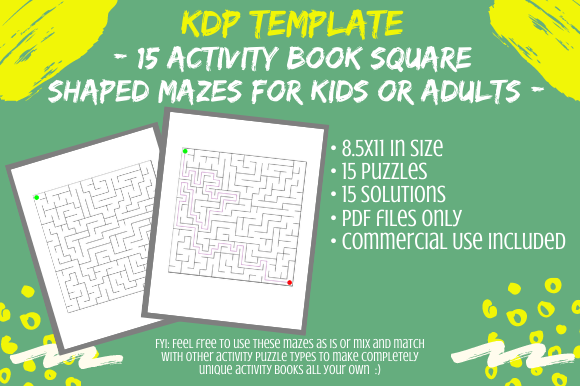
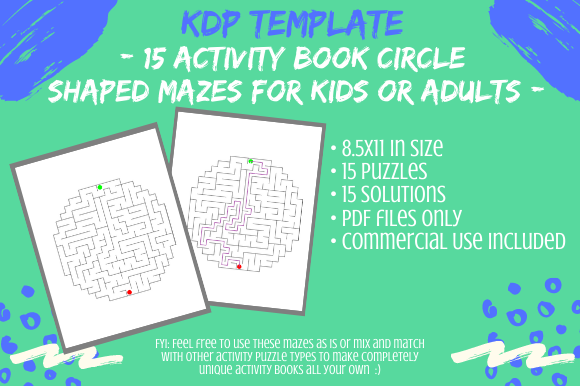
Creating low-content and medium-content books for Amazon KDP requires a balance between creative variety and production efficiency. For publishers and designers, sourcing high-quality interiors that are ready for print but flexible enough for customization is a critical step in the workflow. The 15 Circle Mazes for KDP Activity Books package serves as a foundational asset in this process, providing a specific geometric puzzle type that differs from standard rectangular layouts. This resource includes 15 distinct circle-shaped mazes formatted for 8.5x11 inch interiors with no bleed, delivered as a single PDF file containing both puzzle pages and corresponding solutions.
Integrating this asset into your publishing workflow goes beyond simply uploading a file. It functions as a modular component that can be used to break up visual monotony in activity books, serve as a standalone mini-booklet, or act as a base template for further design iteration. Understanding how to manipulate, organize, and enhance these files ensures that the final product meets quality standards while avoiding common platform pitfalls related to duplicate content.
Technical Specifications and File Management
Before incorporating these mazes into a project, it is essential to understand the technical parameters of the provided assets. The download consists of a 30-page PDF document. This includes 15 individual puzzle pages and 15 solution pages, formatted specifically for 8.5 x 11 inch dimensions with no bleed. The absence of bleed is a significant workflow advantage for many KDP creators, as it simplifies the margin setup and reduces the risk of crucial design elements being trimmed during the printing process.
Effective file management is the first step in utilizing this digital product. Upon download, you should immediately create a duplicate copy of the master PDF. Never edit the original source file. Maintaining an unaltered master copy ensures you always have a clean baseline for future projects or recovery if a working file becomes corrupted. Store the master in a dedicated "Assets" or "Templates" folder within your project directory structure, separate from your active "Working Files." This organizational habit prevents version control issues and streamlines the retrieval process when scaling your catalog.
Compatibility and Editing Workflows
While the PDF is ready for use as-is, most professional workflows require some level of modification to ensure uniqueness. The file is compatible with various online PDF converters and desktop editing software. When selecting a tool for editing, consider the complexity of the changes you intend to make. Simple reordering or merging can often be handled by free online tools, whereas adding custom typography, branding, or intricate clip art may require vector-based software like Adobe Illustrator or Affinity Designer.
If you are using online converters, verify that the output resolution remains at 300 DPI. Some web-based tools compress images to reduce file size, which can result in pixelated lines unsuitable for print. Always download a test page and zoom in to 100% to inspect line crispness before committing to a full conversion. For those integrating these mazes into larger manuscripts, ensure your document settings match the 8.5x11 no-bleed specification exactly to prevent alignment shifts during the merge process.
Strategic Integration into Activity Book Interiors
The primary value of circle-shaped mazes lies in their ability to provide visual contrast. Most maze books rely exclusively on square or rectangular grids. Introducing circular geometry disrupts pattern fatigue and increases user engagement. In a practical workflow, these 15 mazes should be viewed as modular blocks rather than a fixed sequence.
Mixing and Matching Content: You can deconstruct the PDF to intersperse circle mazes throughout a broader activity book. For example, placing a circle maze after three pages of word searches creates a cognitive palette cleanser for the user. This variation improves the perceived value of the book and encourages longer session times. When rearranging pages, remember to keep track of the corresponding solution pages. A systematic naming convention (e.g., CircleMaze_01_Puzzle.pdf and CircleMaze_01_Solution.pdf) helps prevent mismatched answers during the assembly phase.
Standalone vs. Hybrid Formats: These 15 mazes can function as a complete standalone booklet, perhaps marketed as a "Quick Brain Break" or "Travel Size Puzzle Pack." Alternatively, they can be combined with other maze types, coloring pages, or educational content to create a comprehensive volume. The decision depends on your niche research and keyword strategy. If targeting a specific demographic, such as seniors or children, the surrounding content should be tailored to match the difficulty and aesthetic of the circle mazes.
Customization and Avoiding Duplicate Content Issues
A critical aspect of KDP publishing is adhering to Amazon’s content policies regarding duplicate material. Using a pre-made interior without modification carries the risk of being flagged, especially if multiple sellers purchase the same asset pack. To mitigate this, you must treat the 15 Circle Mazes for KDP Activity Books as a starting point, not a final product. Making the template "all your own" is a mandatory step in a professional publishing workflow.
- Add Unique Branding: Incorporate custom headers, footers, or logos on each page. This not only differentiates your book but also builds brand recognition across your catalog.
- Integrate Complementary Elements: Add relevant clip art, inspirational quotes, or factoids related to the maze theme. For instance, if the mazes are space-themed, include brief astronomy facts on the puzzle pages.
- Modify Page Titles: Change generic titles like "Maze 1" to descriptive, engaging headings that fit your book’s narrative or theme.
- Adjust Difficulty or Layout: If your editing skills allow, modify the start/end points or add decorative borders to alter the visual footprint of the page.
- Combine with Original Content: Intersperse the purchased mazes with pages you created from scratch. A higher ratio of original-to-purchased content significantly reduces duplication risks.
This customization process serves a dual purpose: it satisfies platform requirements and enhances the customer experience by providing a cohesive, polished product rather than a generic compilation.
Quality Control and Pre-Publication Checklist
Even when using professionally designed assets, quality control (QC) is non-negotiable. Errors in puzzle books lead to negative reviews and returns. Implement a QC checkpoint specifically for these mazes before finalizing your manuscript.
- Solution Verification: Manually solve every single maze. Do not assume the included solutions are correct or that they match the current page order after editing. Human error during file manipulation is common.
- Margin Inspection: Since this is a no-bleed file, verify that all maze elements fall within the safe zone. Use KDP’s previewer or template guides to ensure nothing is too close to the gutter or outer edge.
- Contrast Check: Ensure lines are solid black and sufficiently thick for printing. Faint gray lines may disappear or look muddy on standard KDP paper stock.
- Page Count Alignment: Confirm that your total page count matches your metadata. Adding intro pages, branding, or extra activities will change the spine width calculation.
By treating QC as a structured phase rather than an afterthought, you protect your reputation and reduce post-publication fixes.
Long-Term Asset Utilization and Scalability
The 15 Circle Mazes for KDP Activity Books should be integrated into a broader asset library strategy. Rather than viewing this as a one-time purchase for a single book, consider its long-term utility. Tag the file in your digital asset management system with relevant metadata: shape, difficulty level, age group, and license terms. This makes retrieval efficient when planning future series or seasonal updates.
For entrepreneurs and publishers managing multiple titles, this asset supports scalability. Once customized and verified, your unique version of these mazes becomes a proprietary building block. You can reuse your customized layouts across different books, provided you continue to vary the surrounding content and presentation. This approach maximizes the return on investment for the initial asset purchase while maintaining the freshness required for market success.
Ultimately, successful KDP publishing relies on the seamless integration of external resources with internal creativity. By approaching these circle mazes with a focus on organization, customization, and rigorous quality assurance, you transform a simple digital download into a sustainable component of your publishing business. The goal is not just to produce a book, but to establish a repeatable, efficient workflow that yields high-quality products consistently.