Streamlining Low Content Publishing with a Simple Daily Planner KDP Interior
The landscape of self-publishing has shifted dramatically toward efficiency and scalability, particularly within the low and no-content book sector. For creators managing a portfolio of journals, logbooks, and organizers, the bottleneck is rarely the concept but rather the technical execution of the interior files. Utilizing a pre-designed Simple Daily Planner - KDP Interior addresses this friction point directly. This resource is not merely a template; it is a comprehensive production asset designed to bridge the gap between creative ideation and physical product availability. By providing multiple file formats and tested specifications, this interior solution allows publishers to focus on niche research and marketing rather than repetitive graphic design tasks.
Technical Versatility Across File Formats
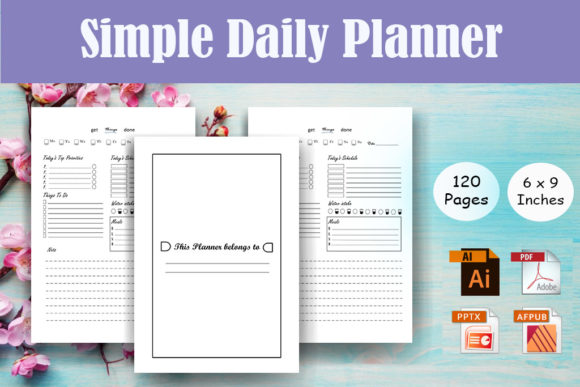
One of the most significant advantages of this specific download package is the inclusion of four distinct file types. In the world of print-on-demand, relying solely on PDF can be limiting. While the included PDF files are ready for immediate upload to Amazon KDP and have been rigorously tested for platform compliance, the additional editable formats provide long-term business value.
- PDF Files: These serve as the master print-ready documents. They are flattened and optimized for high-resolution printing at 6x9 inches. Having a pre-tested PDF eliminates common rejection errors related to bleed, margins, or color space, ensuring a smooth submission process.
- AI (Adobe Illustrator) Files: For designers who require vector-level precision, the AI files allow for deep customization. This format is essential for adjusting layout grids, modifying typography, or creating derivative works without losing quality. It supports professional workflows where branding consistency across multiple planner variations is necessary.
- AFPUB (Affinity Publisher) Files: Affinity Publisher has emerged as a powerful, cost-effective alternative to industry-standard software. Including AFPUB files caters to a growing segment of independent publishers who prefer this ecosystem. It allows for non-destructive editing and master page management specifically tailored for multi-page documents like planners.
- PPTX (PowerPoint) Files: Perhaps the most accessible format for non-designers, the editable PowerPoint file democratizes the customization process. Users without specialized graphic design training can easily alter text, swap images, or adjust spacing using familiar tools. This lowers the barrier to entry for educators, hobbyists, or small business owners entering the KDP space.
Optimizing the 6x9 Trim Size for Daily Use
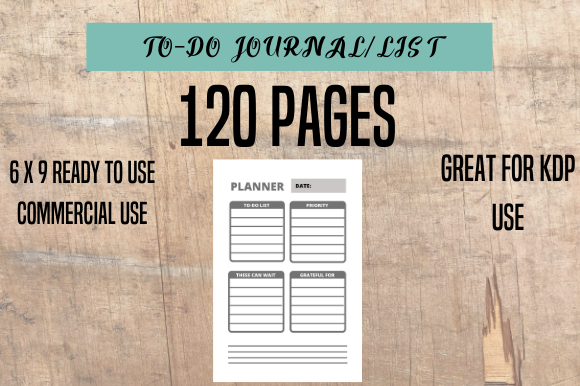
The selection of a 6x9 inch trim size for this Simple Daily Planner - KDP Interior is strategic rather than arbitrary. In the stationery and organizer market, form factor dictates utility. The 6x9 dimension strikes an optimal balance between portability and writing surface area. Unlike larger 8.5x11 formats which are often relegated to desk use, or pocket-sized 5x8 notebooks that limit detailed planning, the 6x9 size fits comfortably in standard bags, backpacks, and even large coat pockets.
For the end-user, this size offers sufficient horizontal space for daily scheduling blocks, to-do lists, and note-taking sections without feeling cramped. From a publishing economics perspective, this trim size also maintains competitive printing costs while allowing for a perceived value that supports healthy royalty margins. The 120-page count further enhances this utility, providing approximately four months of daily tracking or a substantial undated planning period, making it a versatile product for year-round sales rather than just seasonal Q4 demand.
Customization Strategies for Niche Differentiation
While the base interior provides a functional structure, success in the low-content market relies on differentiation. The editable nature of these files enables publishers to adapt the generic "simple daily planner" framework into specialized tools for specific audiences. This transforms a commodity product into a targeted solution.
Adapting for Professional Verticals
Professionals often require planners that speak their specific language. Using the editable AI or PPTX files, a publisher could modify the header sections to include fields relevant to real estate agents, such as "Property Showings" or "Client Follow-ups." Similarly, medical professionals might benefit from added sections for patient rounds or continuing education tracking. By leveraging the flexible interior, you move beyond competing for the broad "daily planner" keyword and target lower-competition, higher-intent search terms.
Educational and Academic Applications
Educators and students represent a massive demographic for organizational tools. The simple layout can be adjusted to include academic calendars, assignment trackers, or grade logging sections. Because the files are high-resolution and fully editable, adding university-specific branding or curriculum-aligned headers is straightforward. This adaptability makes the interior suitable for creating teacher planners, homeschooling organizers, or student study logs without redesigning the core pagination structure.
Production Quality and Print Readiness
A critical consideration for any KDP publisher is the final physical output. Digital previews often fail to reveal issues that become apparent only after printing. This Simple Daily Planner - KDP Interior mitigates risk through high-resolution assets and pre-testing. High resolution is particularly important for planners because users interact with them tactilely; blurry lines or pixelated text degrade the user experience immediately.
The interiors are designed with proper bleed and safe zones inherent to the 6x9 specification. When customizing the files, maintaining these safety margins is crucial. The provided templates act as a guardrail, helping users avoid placing critical content too close to the gutter or trim edge. This technical foundation ensures that whether you are printing a single author copy or scaling to thousands of units, the consistency remains intact. Furthermore, the simplicity of the design typically translates to better ink coverage management, reducing the likelihood of bleed-through on standard KDP paper stock compared to heavily illustrated interiors.
Workflow Integration for Scalable Publishing
For those treating KDP as a serious business rather than a casual hobby, workflow efficiency determines profitability. Integrating this downloadable interior into your production pipeline saves dozens of hours per title. Instead of spending twenty hours designing a planner from scratch, the time investment shifts to fifteen minutes of customization and thirty minutes of keyword research and cover design.
This efficiency allows for rapid A/B testing. Publishers can create three or four variations of the same core planner—perhaps one minimalist black and white version, one colorful floral version, and one corporate-themed version—all derived from the same source files. Testing different covers and titles against the same proven interior structure isolates variables and accelerates data collection on what resonates with buyers. The inclusion of multiple file formats ensures that this workflow remains unblocked regardless of software updates or licensing changes; if one program becomes unavailable, the project can continue seamlessly in another.
User Experience and Functional Design Principles
The "simple" descriptor in Simple Daily Planner - KDP Interior refers to cognitive load management. Effective planner design prioritizes clarity over decoration. End-users purchase these books to reduce mental clutter, not add to it. The layout likely utilizes clean lines, ample whitespace, and intuitive hierarchy to guide the eye naturally from date entry to task prioritization.
When utilizing this interior, it is vital to preserve this functional integrity during customization. Overcrowding the pages with excessive prompts or decorative elements can negate the benefits of the original design. The best modifications enhance usability for a specific group without compromising the universal appeal of a clean layout. Observations of successful planner brands suggest that users return to products that feel effortless to maintain. By starting with a professionally structured interior, publishers inherit best practices in information architecture that have been validated by market usage.
Considerations for Commercial Licensing and Usage
When incorporating third-party interiors into a commercial publishing business, understanding the scope of use is paramount. While this package provides extensive editing capabilities, publishers should always verify the specific license terms regarding modification and redistribution. Typically, these resources are licensed for end-product creation (selling the printed book) rather than reselling the digital files themselves.
Additionally, while the files are tested for KDP, platforms occasionally update their submission guidelines. Maintaining awareness of current KDP specifications ensures continued compliance. The advantage of having editable source files is the ability to quickly adapt to platform changes; if Amazon adjusts margin requirements, an AI or AFPUB file can be updated globally across all 120 pages in moments, whereas a static PDF would require complete reconstruction. This future-proofing aspect is a subtle but critical component of the product's value proposition for long-term business sustainability.