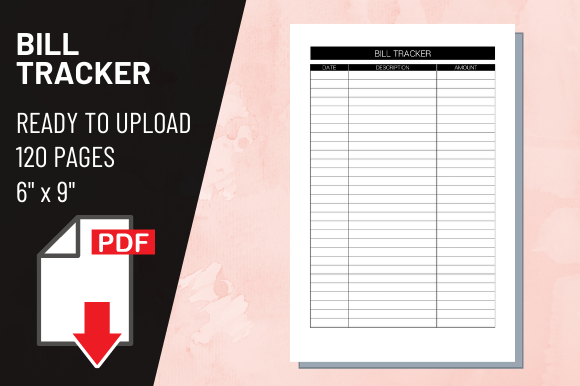
Streamlining Financial Organization with a Dedicated KDP Interior Bill Tracker
Financial clarity often begins not with complex software, but with the tactile act of recording and reviewing expenses on paper. For self-publishers, small business owners, and individuals managing household budgets, the physical format of a ledger matters as much as the data it contains. A specialized KDP Interior Bill Tracker designed at 6″ x 9″ offers a distinct advantage over generic notebooks or digital spreadsheets by providing a structured, portable, and print-ready solution for expense management. This specific trim size strikes an optimal balance between portability and writing space, making it an essential tool for those who prefer analog tracking methods or require a physical backup to digital accounting systems.
The Strategic Advantage of the 6x9 Trim Size
Selecting the correct dimensions for a financial logbook is a critical decision that impacts daily usability. The 6″ x 9″ format has emerged as the industry standard for functional journals and trackers for several practical reasons. Unlike larger 8.5″ x 11″ ledgers that must remain desk-bound, the 6x9 size fits easily into briefcases, glove compartments, and large pockets. This portability ensures that users can record transactions immediately after they occur, reducing the likelihood of forgotten expenses or estimated entries that compromise budget accuracy.
Furthermore, this trim size maximizes cost-efficiency in printing without sacrificing utility. When utilizing a bill tracker KDP interior, the page count directly influences production costs and perceived value. At 120 pages, a 6x9 book provides approximately six months of daily tracking or a full year of weekly summaries, depending on the layout density. This duration aligns perfectly with standard fiscal half-years or annual budgeting cycles, allowing users to archive completed books as physical records for tax season or financial audits. The compact footprint also means the book does not dominate a workspace, allowing it to coexist alongside other reference materials, calendars, and planning tools.
Technical Specifications for Print-Ready Interiors
For creators and end-users alike, understanding the technical foundation of a high-quality tracker is essential. A professional-grade PDF file intended for Amazon KDP or similar print-on-demand services must adhere to strict specifications to ensure the final product is functional and aesthetically pleasing. The requirement for 300 dpi resolution is non-negotiable for line art and text-heavy interiors. While screens may display 72 or 96 dpi images clearly, printing at lower resolutions results in fuzzy lines and gray-scale text that makes financial recording frustrating and unprofessional.
The specification of "no bleed" is equally important for this type of interior. In a bill tracker where margins serve as visual guides and safe zones for binding, extending elements to the edge of the paper is rarely necessary and often problematic. A no-bleed configuration ensures that all tables, headers, and instructional text remain safely within the printable area, regardless of minor mechanical shifts during the trimming process. This safety margin preserves the integrity of the grid lines and writing spaces, ensuring that every page in the 120-page package is fully usable from top to bottom and gutter to fore-edge.
Functional Layouts and Data Capture Fields
A superior KDP Interior Bill Tracker distinguishes itself through thoughtful column design rather than mere aesthetic appeal. Effective financial tracking requires specific data points that go beyond simple debit and credit columns. When evaluating or designing a 6x9 interior, the inclusion of the following fields transforms a basic notebook into a powerful analytical tool:
- Date and Reference Number: Essential for cross-referencing bank statements and receipts.
- Payee and Category: Allows for quick sorting of expenses (e.g., Utilities, Inventory, Subscriptions) without requiring a separate index.
- Due Date vs. Paid Date: Critical for avoiding late fees and tracking cash flow timing discrepancies.
- Payment Method: Distinguishes between cash, credit, debit, and automatic transfers, aiding in reconciliation.
- Status Checkbox: Provides immediate visual confirmation of outstanding versus settled obligations.
- Notes Section: Offers space for context, such as contract terms, return policy windows, or vendor contact information.
In a 6x9 format, these columns must be proportioned correctly. Horizontal spacing should accommodate average handwriting size while maximizing the number of entries per page. Typically, a well-designed 6x9 tracker allows for 20 to 25 entries per page, which supports the 120-page capacity mentioned earlier. This density prevents the user from burning through pages too quickly while maintaining enough white space to prevent visual fatigue during monthly reviews.
Diverse Applications Across User Groups
The versatility of a standardized bill tracker KDP interior extends far beyond personal household budgeting. Different demographics utilize the same 6x9 framework for vastly different organizational needs, demonstrating the universal value of structured analog tracking.
Small Business Owners and Freelancers: For solopreneurs, separating business expenses from personal spending is a tax compliance necessity. A dedicated 6x9 tracker serves as a tangible audit trail. Because it is physically separate from personal finances, it simplifies end-of-year accounting. The 120-page length is ideal for tracking quarterly estimated taxes and recurring vendor payments without the overhead of enterprise accounting software.
Educators and Researchers: Grant management and departmental budgets often require meticulous tracking of fund allocation. A portable tracker allows researchers to monitor spending against grant caps while in the field or at conferences. The physical record provides an immediate check against overspending before digital systems are updated, preventing budget overruns that could jeopardize future funding.
Property Managers and Landlords: Managing multiple rental units involves tracking maintenance requests, utility payments, and contractor invoices across various properties. A 6x9 tracker can be dedicated to a single property or a specific quarter, creating a modular filing system. The "no bleed" layout ensures that when pages are photocopied for tenant files or legal proceedings, no information is lost in the binding gutter.
Caregivers and Estate Managers: Managing finances for elderly relatives or settling an estate requires transparent, chronological record-keeping. A physical book provides a neutral, accessible record that multiple family members or professionals can review. The simplicity of a printed interior removes technological barriers, allowing anyone involved in the care or administration to participate in financial oversight without needing login credentials or software training.
Optimizing the User Experience Through Design
The success of any KDP Interior Bill Tracker relies heavily on user experience (UX) principles applied to print. Even with perfect 300 dpi resolution and correct 6x9 dimensions, a poorly laid out interior will fail to retain users. Several subtle design choices significantly enhance the functionality of the 120-page package.
Paper opacity and ink bleed-through are primary concerns for users who prefer gel pens or markers. While the creator cannot control KDP’s paper stock, they can mitigate issues through design. Using lighter gray tones for grid lines and table borders rather than solid black reduces the total ink coverage on the page. This not only improves the visual elegance of the tracker but also minimizes the risk of show-through on double-sided printed pages. Adequate row height—typically no less than 0.3 inches—accommodates various handwriting styles and prevents the page from looking cluttered.
Navigation aids are another crucial UX element. Including monthly divider pages or pre-printed tabs within the 120-page count helps users segment their financial year. Alternatively, leaving the first few pages blank for a custom index allows users to create their own navigation system. Header and footer consistency also plays a role; placing page numbers and section titles in predictable locations reduces cognitive load, allowing the user to focus entirely on data entry rather than searching for their place in the book.
Integration with Digital Workflows
While the bill tracker KDP interior is fundamentally an analog tool, it functions best when viewed as part of a hybrid ecosystem. Modern financial management rarely exists solely on paper or solely in the cloud. The physical tracker serves as the point-of-entry capture device, while digital tools handle long-term storage, analysis, and reporting.
Users frequently employ the 6x9 tracker for daily logging because it is faster and less distracting than opening a laptop or phone app. At the end of the week or month, the recorded data is transcribed into spreadsheet software or accounting platforms. This two-step process actually enhances accuracy; the act of transcription forces a second review of each transaction, catching errors or categorization mistakes that might have been missed during initial entry. The physical book then becomes a verified source document, stored for reference if digital records are ever questioned or corrupted.
For creators selling these interiors, highlighting this hybrid utility adds significant value. Marketing the tracker not as a replacement for technology, but as a complementary tool for mindful financial management, resonates with a broad audience seeking balance between digital efficiency and analog intentionality. The 6x9 size, 120-page count, and high-resolution no-bleed format collectively support this integrated workflow, providing a reliable foundation for financial organization in an increasingly complex economic landscape.