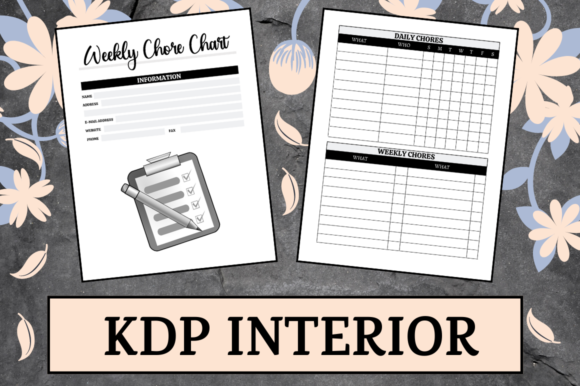
Weekly Chore Chart KDP Interior: Streamlining Production for Low Content Publishers
For self-publishers and digital product creators, the efficiency of asset creation often dictates profitability. The Weekly Chore Chart KDP Interior serves as a foundational production asset designed to eliminate the repetitive design phase of low-content publishing. Rather than spending hours formatting tables, adjusting margins, or testing bleed settings for every new title, this pre-formatted interior allows publishers to focus on niche research, cover design, and marketing strategy. It functions as a standardized template that integrates directly into the Amazon KDP upload workflow, ensuring technical compliance while maintaining creative flexibility across multiple product variations.
Technical Specifications and Platform Compatibility
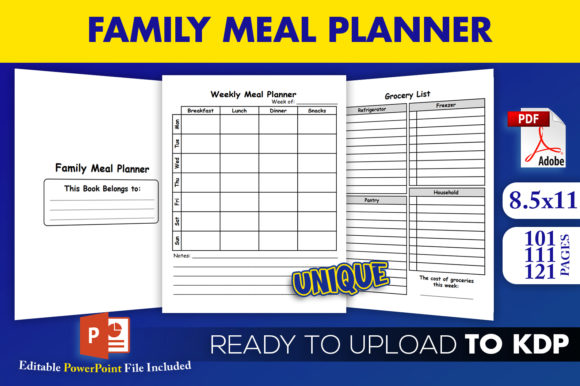
Understanding the precise technical parameters of this interior is essential for avoiding rejection during the KDP review process. This specific Weekly Chore Chart KDP Interior is engineered for an 8.5 x 11 inch trim size with no bleed. The "no bleed" specification is critical for functional planners and chore charts; it ensures that all content, including table borders and header text, remains safely within the printable area without being trimmed off during manufacturing. This margin safety zone prevents common printing errors where lines disappear into the binding or page edge.
The package includes 120 pages, providing sufficient volume for a quarterly planner, a yearly tracker with additional note sections, or a comprehensive household management book. Having three distinct PDF variants included in the asset pack addresses the need for A/B testing and portfolio diversification. Instead of publishing identical books, creators can utilize these variants to target different sub-niches—such as minimalist organization, family-focused tracking, or gamified chore systems—without altering the core structural integrity of the file. Each variant has been tested for KDP compatibility, meaning the DPI, color profile, and font embedding meet Amazon’s automated quality checks.
Integrating the Interior into Pre-Production Workflows
The value of a pre-made Weekly Chore Chart KDP Interior extends beyond simple time savings; it fundamentally changes the pre-production workflow. Before opening any design software, publishers should conduct niche validation. Because the interior structure is fixed, the creative effort shifts entirely to positioning. Research keywords related to specific demographics, such as "ADHD cleaning schedule," "homeschool chore tracker," or "elderly care daily log." Once a viable keyword cluster is identified, select the PDF variant that best matches the user intent associated with those terms.
This asset also streamlines the cover design process. Knowing the exact page count (120 pages) and trim size (8.5 x 11) upfront allows for immediate spine width calculation. Publishers can generate accurate cover templates using the KDP Cover Calculator before finalizing the interior selection. This parallel processing reduces bottlenecks. Furthermore, because the interior is already formatted, there is no need to create mockups from scratch for marketing materials. Screenshots of the three PDF variants can be used directly in Amazon A+ Content or social media promotions to showcase the internal layout to potential buyers.
Strategic Application During the Publishing Process
During the actual assembly and upload phase, the Weekly Chore Chart KDP Interior acts as a quality control anchor. One of the most frequent causes of delayed publication is margin errors. By utilizing a tested no-bleed template, publishers mitigate the risk of text falling outside the safe zone. When uploading to KDP, the system will automatically recognize the 8.5 x 11 dimensions. It is vital to ensure the metadata entered during setup matches the physical attributes of the PDF. Selecting "Black & White Interior with White Paper" is typically the most cost-effective choice for chore charts, maximizing royalty margins while maintaining high contrast for usability.
The existence of three variants facilitates rapid iteration. If a publisher identifies a trending search term mid-project, they can pivot instantly by selecting the alternative layout that better suits the trend without redesigning the book. For example, if market research indicates a surge in interest for "visual schedules," the variant with more icon-based or open-space layouts can be deployed immediately. This agility is difficult to achieve when building interiors from scratch for every release. The pre-formatted nature of the file also simplifies the proofing stage. Digital proofs can be reviewed faster because the layout consistency is guaranteed, allowing the publisher to focus solely on verifying that the cover aligns correctly with the predetermined page count.
Post-Publication Optimization and Portfolio Management
After publication, the Weekly Chore Chart KDP Interior supports long-term business scalability. Tracking sales data becomes more meaningful when variables are controlled. If two books use the same interior variant but different covers and keywords, performance differences can be attributed to marketing rather than product utility. Conversely, if the same cover style is applied to different interior variants, publishers can determine which layout resonates best with their audience. This data-driven approach transforms the interior from a static file into a dynamic testing variable.
Customer feedback loops are also enhanced. Reviews often mention specific likes or dislikes regarding layout functionality. Because the interior is a standardized asset, addressing negative feedback in future editions is straightforward. If users consistently request more writing space or larger checkboxes, the publisher knows exactly what to look for in future asset acquisitions or custom modifications. Additionally, having a reliable, tested interior builds brand consistency. Customers who purchase one chore chart and find the formatting professional and print-ready are more likely to trust other titles in the series, fostering repeat purchases and brand loyalty.
Practical Implementation Tips for Maximum Efficiency
To fully leverage this resource, publishers should adopt specific operational habits that complement the pre-formatted nature of the Weekly Chore Chart KDP Interior. Organization is paramount. Maintain a clear file naming convention that identifies the trim size, page count, bleed setting, and variant number. This prevents accidental uploads of incorrect files, which can lead to rejected submissions or poor customer experiences. Store the master PDFs separately from working copies to preserve the integrity of the tested source files.
- Batch Processing: Group projects by interior type. Upload all books using Variant A in a single session, then move to Variant B. This reduces cognitive load and setup time compared to switching between different specifications.
- Cross-Platform Adaptation: While optimized for KDP, the 8.5 x 11 no-bleed format is universally compatible with other print-on-demand services like IngramSpark or Lulu. This allows for multi-channel distribution without reformatting.
- Digital Product Expansion: The PDF variants can be repurposed as digital downloads on platforms like Etsy or Gumroad. Since the files are already high-resolution and properly sized, they serve as instant deliverables for customers preferring tablet-based planning.
- Metadata Alignment: Ensure backend keywords reflect the specific layout features of the chosen variant. If Variant C includes habit tracking elements not present in A or B, include "habit tracker" in the metadata specifically for that ASIN.
Quality Assurance and Usability Considerations
Even with tested assets, human oversight remains necessary. Always order a physical proof copy before launching ads or driving external traffic. Screen resolution does not always accurately represent paper opacity or line weight in print. Verify that the grayscale levels in the Weekly Chore Chart KDP Interior provide enough contrast for handwriting visibility. Check that the binding gutter does not obscure functional areas of the chart, even in a no-bleed configuration. Physical validation confirms that the theoretical usability translates to real-world application.
Usability also extends to the end-user experience. Consider adding value-added content to the first few pages of the 120-page block. A simple "How to Use This Chart" page, a goal-setting worksheet, or a motivational quote can differentiate a generic interior from a thoughtful product. Since the interior is pre-formatted, these additions must be planned within the existing page count or accounted for during the initial selection process. However, sticking to the tested 120-page structure ensures that the technical foundation remains solid. Balancing customization with standardization is the key to sustainable low-content publishing.
Ultimately, the Weekly Chore Chart KDP Interior represents a shift from artisanal creation to systematic production. It removes technical friction, allowing entrepreneurs, educators, and creators to concentrate on connecting with their audience through relevant niches and compelling covers. By treating this interior as a strategic component of a broader workflow rather than just a file to upload, publishers can build a resilient, scalable catalog that meets genuine user needs while adhering to strict platform standards. The combination of tested formatting, versatile variants, and precise specifications provides the stability required for long-term success in the competitive print-on-demand landscape.