Evaluating the Number Search Puzzles KDP Book Interior for Self-Publishing
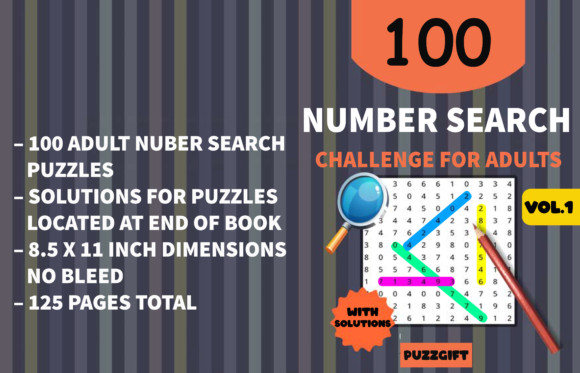
For self-publishers and content creators operating in the low-content or medium-content book niche, sourcing high-quality interiors is often the most significant bottleneck. The Number Search Puzzles KDP Book Interior presents a specific solution for publishers looking to enter the activity book market without investing hundreds of hours in puzzle generation software or manual layout design. This digital asset provides a pre-formatted, 75-page PDF designed specifically for Amazon KDP’s 8.5 x 11-inch trim size with no bleed requirements. Understanding the practical application, limitations, and necessary customization strategies for this interior is essential for anyone considering it as a foundation for their next publishing project.
Technical Specifications and File Integrity
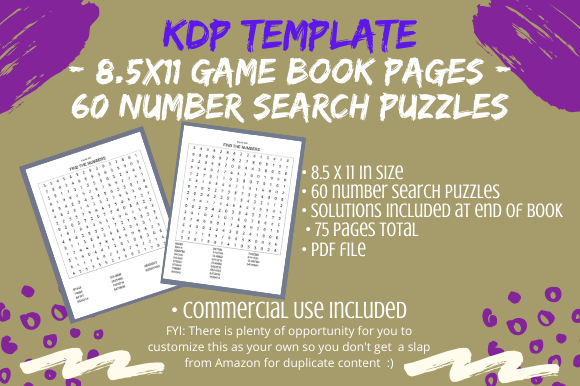
The primary value proposition of this Number Search Puzzles KDP Book Interior lies in its technical readiness. The file arrives as a single PDF containing 60 distinct puzzles and their corresponding solutions. The dimensions are set to the industry-standard 8.5 x 11 inches, which remains the most popular size for adult and teen activity books due to its balance of portability and writing space. Crucially, the file is formatted with no bleed. This distinction matters significantly for new publishers; no-bleed interiors are more forgiving during the printing process and reduce the risk of rejection due to margin errors. The text and puzzle grids are contained safely within the safe zone, ensuring that critical content is never trimmed off during manufacturing.
However, users must understand the file structure before beginning production. The included PDF contains only the puzzle content itself. It does not include a cover, title page, or copyright page. Publishers are responsible for creating these front-matter elements and merging them with the puzzle interior before uploading to KDP. This separation is actually advantageous, as it forces the creator to establish proper book metadata and branding rather than relying on generic placeholders that could flag the book as low-quality spam. Additionally, because the file is delivered as a flattened PDF, direct editing requires conversion. Utilizing tools like Smallpdf or similar online converters to transform the PDF into an editable Word or InDesign document is a recommended first step for those intending to modify the layout.
Content Volume and Structural Organization
The interior includes exactly 60 number search puzzles, resulting in a 75-page total count when accounting for solution pages. This volume places the book in a competitive sweet spot for pricing. Activity books with fewer than 50 puzzles often struggle to justify price points above $6.99, while those exceeding 100 pages can drive up printing costs and reduce royalty margins. A 75-page count allows for a perceived value that supports mid-tier pricing while keeping print costs low enough to maintain healthy profits.
The organization follows a logical user experience flow: puzzles first, solutions at the end. This is the expected standard for the genre. Deviating from this structure can lead to negative reviews from customers who find answer keys intrusive or difficult to locate. The consistency of the grid layouts across all 60 puzzles also contributes to a professional appearance. Inconsistent margins or varying font sizes are common hallmarks of amateur puzzle books; this template avoids those pitfalls by maintaining uniform spacing throughout the document.
The Critical Importance of Customization and Uniqueness
Perhaps the most vital aspect of utilizing this Number Search Puzzles KDP Book Interior is understanding Amazon’s duplicate content policies. The provider explicitly recommends making the template your own, and this advice cannot be overstated. Uploading this PDF "as is" alongside dozens of other users doing the same is a direct path to account suspension or book blocking. Amazon’s algorithms are increasingly sophisticated at identifying identical interior blocks across multiple titles.
To mitigate this risk and create genuine market value, publishers should treat this file as a raw material rather than a finished product. Practical customization strategies include:
- Page Reordering: Shuffle the sequence of the 60 puzzles so your book’s internal structure differs from others using the same source.
- Visual Enhancement: Add relevant clip art, borders, or thematic graphics to the header or footer areas to break up visual monotony.
- Content Intermixing: Combine these number searches with other puzzle types such as Sudoku, mazes, or word searches to create a mixed activity book.
- Textual Modifications: Change page titles, add introductory instructions, or include motivational quotes between puzzle sections.
- Branding Integration: Add your publishing imprint logo or website URL to the footer of each page.
These modifications serve a dual purpose: they satisfy platform uniqueness requirements and they enhance the customer experience. A book that feels curated and branded will always outperform one that appears to be a generic data dump.
Workflow Efficiency vs. Creative Control
For professionals managing multiple titles or freelancers offering book creation services, this interior represents a significant time savings. Generating 60 unique, error-free number searches manually can take 20 to 40 hours depending on proficiency. Using this pre-made interior reduces that production time to perhaps two or three hours of customization and formatting verification. This efficiency allows publishers to test market niches rapidly without heavy upfront investment.
However, this efficiency comes with trade-offs. Because the puzzles are pre-generated, you have limited control over difficulty progression unless you manually rearrange or edit individual grids. If your target audience requires a specific difficulty curve—such as starting simple and increasing complexity—you may need to spend additional time reorganizing the content. Furthermore, if you wish to theme the puzzles around specific topics (e.g., "Historical Dates" or "Mathematical Constants"), the generic nature of this interior means you cannot simply swap out word lists as you might with a word search generator. Number searches are inherently abstract, which makes them versatile but less amenable to topical theming.
Audience Fit and Market Positioning
This Number Search Puzzles KDP Book Interior is best suited for specific segments of the self-publishing ecosystem. Established publishers with existing audiences in the brain training, senior activity, or educational supplement niches will find immediate value. The clean, no-bleed format works particularly well for large-print editions targeting older adults, provided the font size meets accessibility standards after any resizing during customization.
Educators and homeschool resource creators may also benefit, though they should verify that the number ranges and grid complexities align with their curriculum goals. For general consumers seeking cognitive exercises, number searches offer a different engagement pattern than word searches—they require visual scanning and pattern recognition without linguistic processing, making them accessible to non-native speakers and individuals with certain learning differences.
Conversely, this interior may not be ideal for publishers seeking highly specialized or branded puzzle experiences. If your business model depends on proprietary puzzle formats or deeply integrated thematic content, this generic template will require more modification effort than it saves. Similarly, absolute beginners who have never used PDF editing tools may face a learning curve with the conversion and reformatting process.
Practical Recommendations for Implementation
Before purchasing or deploying this Number Search Puzzles KDP Book Interior, conduct thorough due diligence. First, always create a working copy of the original file immediately upon download. Preserve the master file untouched for future reference or backup. Second, invest time in learning basic PDF-to-document conversion workflows. Test multiple converters to find one that preserves grid alignment accurately, as number searches are particularly sensitive to formatting shifts.
Third, perform competitive analysis before finalizing your book. Search Amazon for "number search puzzle book" and examine the top ten results. Identify gaps in presentation, description, or content mix that your customized version can fill. If every competitor uses identical black-and-white grids, adding subtle gray shading or decorative elements could provide meaningful differentiation.
Finally, order a physical proof copy before launching. Digital previews cannot reveal how ink density affects readability on cream paper, nor can they confirm that margins feel comfortable during actual use. The 8.5 x 11 no-bleed format generally performs well, but only physical verification ensures the final product meets professional standards. This interior provides a solid structural foundation, but the publisher’s expertise in customization, quality assurance, and market positioning ultimately determines whether the final book succeeds in a crowded marketplace.