Evaluating the Jewelry Making Crafter Printable Planner
For artisans and designers, the transition from a creative concept to a finished product involves significant logistical management. The Jewelry Making Crafter Printable Planner serves as a specialized organizational tool designed to bridge the gap between artistic inspiration and business execution. Unlike generic notebooks or standard digital apps, this resource is structured specifically for the unique workflow of jewelry creation. It functions as both a design journal and a cost-accounting ledger, addressing the dual needs of creative documentation and financial viability. Understanding the specific utility of this planner requires an evaluation of its features against the practical demands of running a jewelry making practice.
Defining the Tool and Its Core Functionality
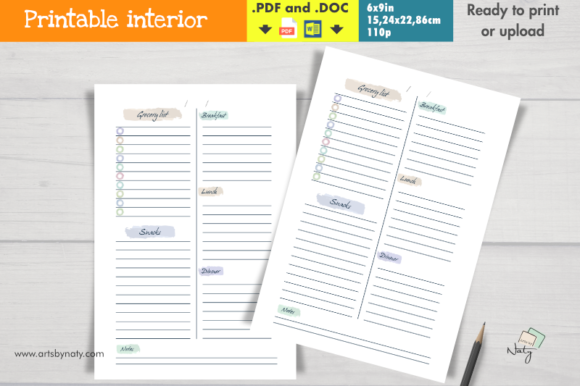
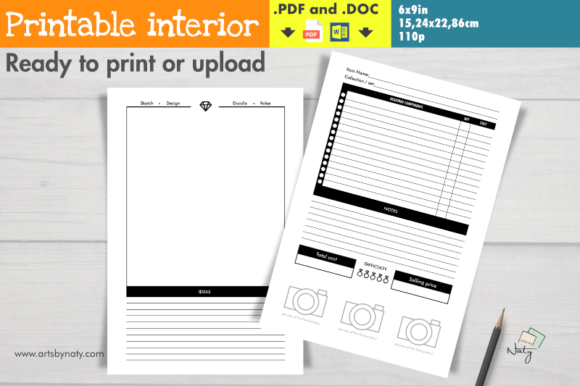
The Jewelry Making Crafter Printable Planner is a 110-page document formatted at 6x9 inches (15.24 x 22.86 cm). It is delivered as a black-and-white interior in both PDF and DOC formats. This dual-format delivery is a critical distinction for potential users. While the PDF offers a ready-to-print solution for those who prefer immediate physical use, the DOC file provides editability. Users can customize the "This notebook belongs to" page and the copyright notice, allowing for personalization or branding if the planner is being used within a larger studio environment or sold as part of a curated kit.
The internal structure moves beyond simple lined paper. Each entry is designed to capture comprehensive data about a single piece or collection. Key fields include the name of the piece, collection set identification, and a difficulty rating. Crucially, it integrates visual and textual planning with dedicated space for sketching alongside spaces for notes and final product photography. This layout acknowledges that jewelry design is iterative; having the sketch, material list, and final photo in one location creates a valuable historical record for future reproduction or portfolio development.
Financial Tracking and Inventory Management
A primary reason makers seek out specialized planners like this is to professionalize their pricing strategy. Creative individuals often struggle to separate the art from the commerce, leading to underpriced goods and unsustainable practices. This planner addresses that friction through dedicated checklists for items, quantities, and price per piece. By forcing the user to itemize components before creation begins, it encourages accurate cost calculation.
The inclusion of specific sections for total cost and final price facilitates better margin analysis. When a crafter consistently records these figures, patterns emerge regarding which materials yield the best return on investment and which designs are too labor-intensive relative to their market value. For those evaluating whether to adopt this system, consider your current pricing confidence. If you frequently guess at prices or fail to account for overhead and labor, the structured constraints of this planner provide necessary discipline. However, if you already utilize complex inventory software or spreadsheet-based costing models, this analog-style tracking may feel redundant or insufficient for high-volume production.
Benefits of Analog Organization in Digital Workflows
In an era dominated by tablets and project management software, a printable planner offers distinct cognitive benefits. Writing by hand has been linked to improved memory retention and idea generation. For jewelry designers, the act of sketching directly next to a materials list can spark connections that might be lost when toggling between different apps. The 6x9 size is also significant; it is portable enough to fit in a bag for sourcing trips or craft fairs yet large enough to accommodate detailed sketches and legible handwriting.
Furthermore, the absence of watermarks ensures a clean, professional aesthetic. This is particularly relevant for creators who may want to photograph their planning process for social media content or client presentations. The ability to print only what is needed reduces waste compared to pre-bound journals, allowing users to scale their usage based on seasonal demand or collection size. This flexibility makes the Jewelry Making Crafter Printable Planner a low-risk investment for testing new organizational habits without committing to expensive proprietary systems.
Tradeoffs and Practical Considerations
While beneficial, this format is not universally superior. Prospective users must weigh the tradeoffs inherent in a printable, semi-editable document. The black-and-white interior is optimized for home printing economy, but it lacks the visual stimulation of full-color templates. Designers who rely heavily on color theory during the planning phase may find they need to supplement the planner with separate swatch books or digital mood boards.
Additionally, the DOC file editability is limited to specific pages. Users cannot easily restructure the internal layout or add custom fields without advanced word processing skills. If your workflow requires tracking metrics not included in the standard template—such as kiln firing schedules, plating thickness, or supplier lead times—you will need to adapt the existing fields or maintain a secondary log. The 110-page count is substantial, but for prolific designers, binding and managing loose printed pages can become cumbersome. Evaluating your tolerance for manual assembly and maintenance is essential before purchase.
Determining Fit: Who Benefits Most?
The Jewelry Making Crafter Printable Planner is strongest for specific user profiles. It is ideal for hobbyists transitioning to professional sellers who need to establish baseline costing and documentation habits without a steep learning curve. It also suits mixed-media artists and small-batch creators who produce unique pieces where individual tracking is more valuable than bulk SKU management. Educators and workshop leaders may also find value in the editable front matter, using the planner as a standardized teaching aid for students learning the business side of craft.
Conversely, alternatives may be worth considering for high-volume manufacturers or those deeply integrated into digital ecosystems. If you manage hundreds of SKUs, require real-time inventory syncing across sales channels, or collaborate with remote teams, a cloud-based ERP or specialized jewelry business software will offer scalability that a printable planner cannot. Similarly, designers who work exclusively digitally may prefer iPad-compatible planners that allow for layer-based sketching and instant hyperlinking to supplier websites.
Making an Informed Decision
Selecting the right organizational tool is ultimately about aligning the medium with your current business stage and cognitive preferences. The Jewelry Making Crafter Printable Planner offers a balanced, tactile approach to managing the intersection of design and finance. Its strength lies in its specificity and accessibility, providing just enough structure to professionalize a practice without overwhelming the creative process. When evaluating this resource, assess your current pain points: Are they related to lost ideas, inaccurate pricing, or disorganized records? If so, this planner likely addresses them effectively. If your challenges relate to automation, collaboration, or color visualization, you may need to look elsewhere or use this planner as a supplementary component of a broader system. By honestly assessing these factors, makers can determine if this tool supports their long-term goals for sustainable, organized creativity.