Evaluating Color Learn Animals and Their Babies as an Early Education Resource
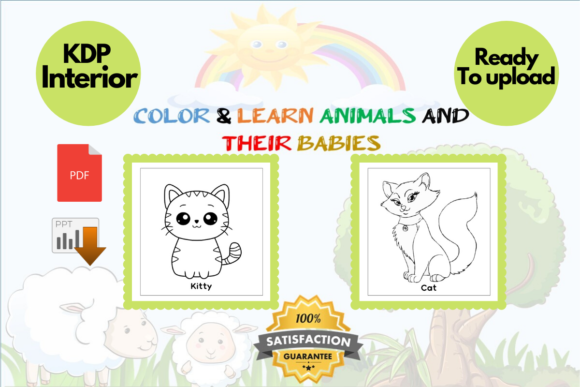
Selecting early learning materials for toddlers and preschoolers often involves balancing educational value with engagement. Parents and educators frequently search for resources that go beyond simple entertainment to provide structured developmental benefits. Color Learn Animals and Their Babies represents a specific niche within this market: a hybrid activity book that combines vocabulary acquisition with fine motor skill development. Unlike standard coloring books or flashcards, this 39-page interior book integrates naming conventions with tactile tasks like cutting and pasting. Understanding where this resource fits into a broader curriculum requires examining its specific methodology, format flexibility, and practical application compared to other early childhood learning tools.
Distinguishing Features of the Hybrid Activity Format
Many animal-themed books for young children focus on a single mode of interaction. A traditional coloring book emphasizes artistic expression and color recognition, while flashcards prioritize rote memorization of names. Color Learn Animals and Their Babies attempts to bridge these approaches by incorporating three distinct learning modalities into a single volume. The inclusion of specific "cut and paste" activities alongside coloring pages transforms the book from a passive consumption item into an active workbook.
This distinction is significant for developmental appropriateness. For toddlers aged two to four, the association between a parent animal and its offspring is a foundational biology concept. However, retaining this information often requires multisensory reinforcement. By having a child color the animal, say the name, and then physically manipulate a cutout to match the baby to the mother, the resource leverages kinesthetic learning. When evaluating this book against standard alternatives, the primary differentiator is this requirement for physical manipulation. Resources that lack this component may be better suited for quiet time or travel, whereas this book is designed for supervised, table-top learning sessions where scissors and glue are accessible.
Digital Flexibility Versus Physical Convenience
A critical decision factor for modern educators and homeschooling parents is format versatility. This resource includes both PDF and PPTX files, which offers distinct advantages over traditional print-only books. The PPTX format allows for customization; educators can rearrange slides, isolate specific animals for focused lessons, or project images onto a smartboard for group instruction. The PDF version serves as a printable master, enabling users to reprint specific pages if a child makes a mistake or wants to repeat an activity.
When comparing this digital-first approach to pre-bound physical workbooks, there are clear tradeoffs. A bound book offers immediate convenience with no setup time, making it superior for spontaneous play or non-digital environments. Conversely, the digital files included with Color Learn Animals and Their Babies require access to a printer and ink, adding a per-page cost and preparation time. However, for classroom settings or families with multiple children, the ability to print unlimited copies outweighs the initial setup friction. Buyers must assess their printing infrastructure and budget before choosing this format over a disposable, single-use paperback.
Assessing Illustration Quality and Resolution
Visual clarity is paramount in early education materials. Low-resolution images can confuse young learners who are still developing visual discrimination skills. This resource specifies high-quality illustrations and resolutions, which is a necessary baseline for any professional teaching material. When evaluating similar digital downloads, users should verify sample pages to ensure lines are crisp enough for coloring and detailed enough for accurate identification of animal features. In this context, "high quality" implies vector-based or high-DPI raster graphics that maintain integrity when scaled for different paper sizes, ensuring that the educational utility remains consistent whether printed on standard letter paper or enlarged for display.
Developmental Appropriateness and Skill Targeting
The stated audience includes kids, preschoolers, and toddlers, but the specific activities dictate a more nuanced age recommendation. While the vocabulary content (animal names) is suitable for children as young as 18 months, the cutting and pasting components generally require a developmental maturity found in children aged three and up. Toddlers may benefit from the coloring and verbal labeling but will likely need significant adult assistance or modified expectations for the assembly tasks.
- Vocabulary Building: Suitable for ages 1.5–5+. Focuses on noun association and familial relationships in nature.
- Fine Motor Skills: Best for ages 3–6+. Scissor use and glue application require hand-eye coordination and bilateral integration.
- Cognitive Matching: Appropriate for ages 2.5–5+. Requires understanding of correspondence and categorization.
Educators comparing this to comprehensive curricula should note that it targets specific micro-skills rather than broad literacy or numeracy. It serves best as a supplementary thematic unit resource rather than a standalone core curriculum. If the goal is comprehensive school readiness including phonics and counting, this book must be paired with other specialized materials.
Comparative Analysis: Digital Downloads vs. Traditional Workbooks
When researching options for animal-themed learning, buyers typically encounter three categories: mass-market activity books, teacher-created digital downloads, and premium educational kits. Color Learn Animals and Their Babies occupies the middle ground of teacher-created digital resources. Compared to mass-market options found in retail stores, it offers greater specificity and editable formats. Mass-market books are often cheaper upfront and require no printing, but they cannot be customized or replenished without repurchasing the entire book.
Compared to premium educational kits that include physical manipulatives (like plastic animal figures or laminated cards), this digital resource is significantly more affordable and space-efficient. However, it lacks the tactile durability and sensory feedback of physical objects. Paper cutouts are fragile and do not provide the same proprioceptive input as moving solid toys. Therefore, this book is an excellent choice for budget-conscious educators or those needing disposable practice sheets, but it may not fully replace the need for durable, reusable manipulatives in a Montessori or Reggio Emilia-inspired environment.
Content Depth and Scope Limitations
With 39 pages, this resource provides a moderate amount of content. For a daily activity, this equates to roughly one month of material if used once per day, or several weeks if combined with other lessons. Buyers seeking extensive encyclopedic coverage of animals may find this scope limited. It is essential to view this as a focused introduction rather than an exhaustive reference. The strength lies in the repetition of the specific "parent-baby" relationship concept rather than sheer volume of species. If a learner masters the concept quickly, educators may need to source additional materials to extend the theme, whereas a larger, more expensive book might offer longer-term engagement without supplemental sourcing.
Practical Implementation Strategies for Educators
To maximize the return on investment for Color Learn Animals and Their Babies, users should consider how the dual-file format supports differentiated instruction. The PPTX file allows teachers to scaffold learning by presenting only the matching portion first, removing the coloring element for students who become easily overwhelmed. Conversely, advanced learners can be challenged to write the animal names or draw additional habitats, utilizing the blank space inherent in digital layouts.
For home users, the print-at-home model supports error tolerance. Young children often ruin worksheets through frustration or accidents. Having a digital master eliminates the anxiety associated with "wasting" a page in a bound book. This psychological safety can encourage experimentation and persistence. However, this benefit relies entirely on the user's willingness to manage digital files and printing logistics. Those who prefer a "grab-and-go" solution without technological friction may find the management overhead detracts from the educational experience.
Making the Final Selection Decision
Choosing Color Learn Animals and Their Babies is most advisable for users who prioritize customization, fine motor integration, and cost-efficiency over convenience and durability. It is particularly well-suited for homeschoolers building thematic units, preschool teachers needing reproducible center activities, and parents who want to actively participate in their child's learning process through guided craft.
Conversely, alternative options may be preferable if the primary need is independent play, travel entertainment, or sensory-rich exploration without paper waste. Evaluating this resource requires honest assessment of the adult's available time for preparation and the child's current scissor proficiency. When aligned with the right user profile and instructional goals, this interior book offers a balanced, interactive approach to early zoological concepts that static books cannot replicate. Ultimately, its value is derived not just from the content itself, but from how effectively the user leverages the digital format to create a tailored learning experience.